Living Roots: The Engine of Soil Biology
Healthy soil is not built by inputs alone—it is driven by living roots.
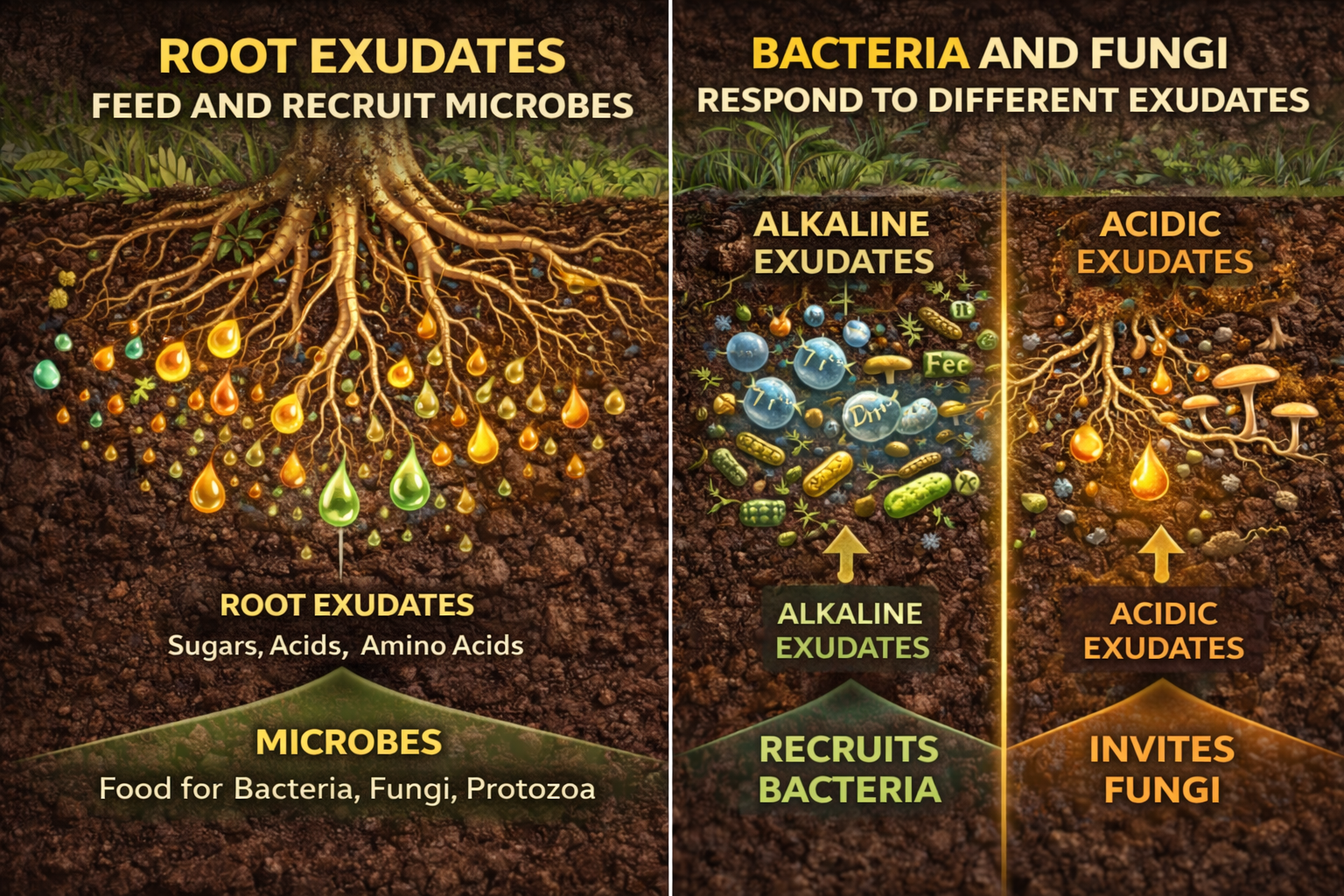
Plants continuously release carbon compounds into the soil through their roots. These compounds, known as root exudates, feed the soil food web and drive biological activity.
Without living roots, this system slows down.
The Big Idea
No living roots → No exudates
No exudates → Biology slows
Living roots are what keep the entire soil system active.
What Living Roots Do
When plants are actively growing, they:
• Release sugars and carbon compounds into the soil
• Feed bacteria, fungi, and other microorganisms
• Support nutrient cycling in the root zone
• Help build soil structure through biological activity
This creates a continuous flow of energy from the plant into the soil ecosystem.
What Happens Without Living Roots
When soil is left bare:
• Carbon flow to microbes stops
• Microbial populations decline
• Soil structure begins to break down
• Nutrient cycling slows
• Soil becomes more prone to compaction and erosion
Bare soil is essentially a biological shutdown.
Living Roots Over Time
In natural systems, living roots are present year-round.
This continuous root activity:
• Maintains active microbial populations
• Improves soil aggregation
• Increases water infiltration and retention
• Supports long-term soil resilience
Agricultural systems that maintain living roots more consistently tend to build soil rather than degrade it.
What This Means in the Field
• Keep living roots in the soil as much as possible
• Use cover crops to extend root activity
• Reduce long periods of bare soil
• Support biology with organic matter and compost
Small changes in root presence can lead to significant improvements in soil function over time.
The Takeaway
Living roots are the engine that drives soil biology.
When roots are active, the soil system is active.
When roots are absent, the system slows.
Plants feed microbes… and microbes feed plants.
ByDesignSoil.com
Stewardship Through Soil Biology