How Microbial Grazing Releases Nitrogen
One of the most important processes in healthy soil is how microorganisms cycle nitrogen.
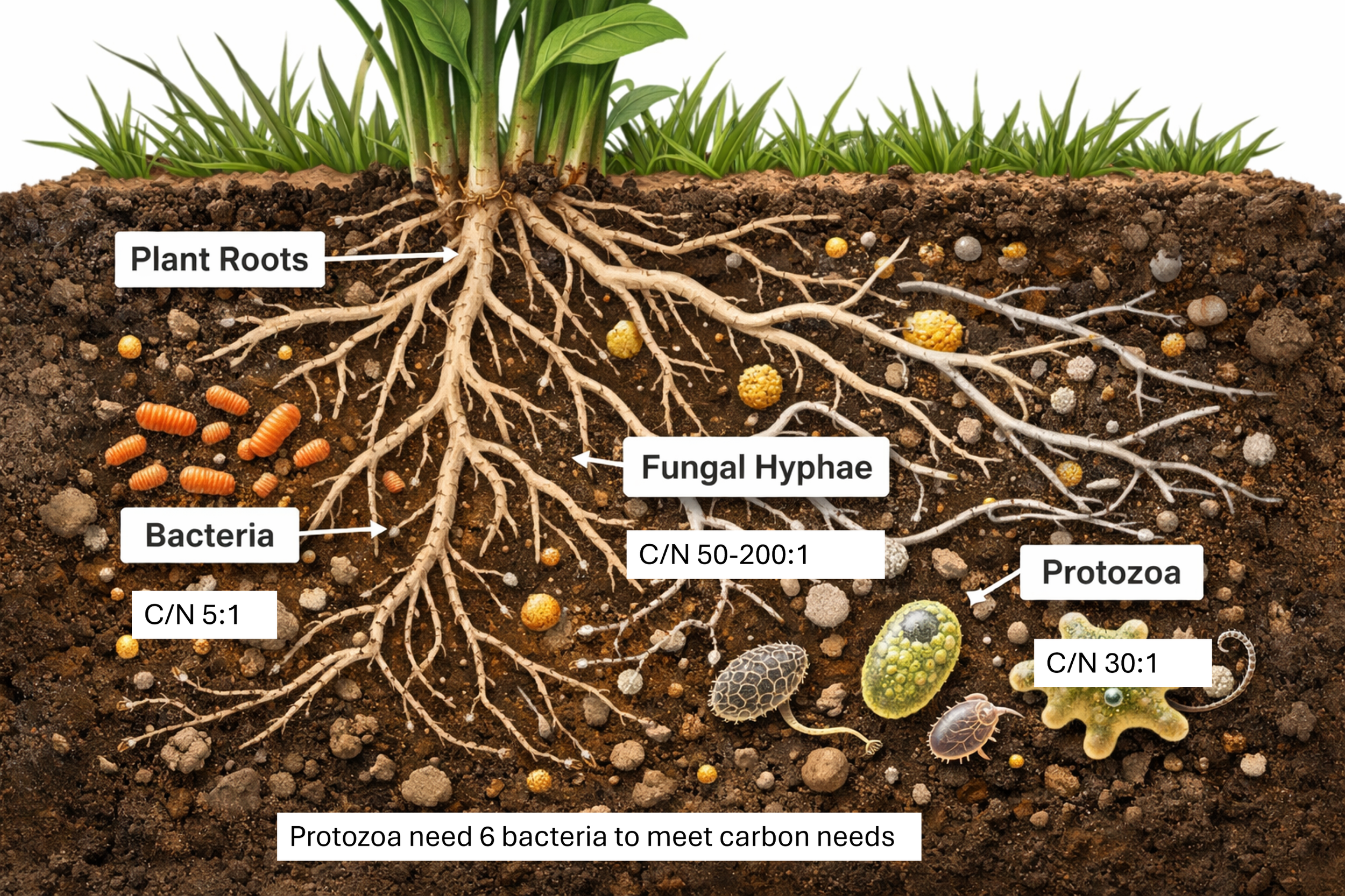
Bacteria typically have a carbon to nitrogen (C) ratio of approximately 5:1, meaning they contain relatively high levels of nitrogen in their biomass. Protozoa, which feed on bacteria, have a much higher C ratio of roughly 30:1.
Because protozoa require more carbon relative to nitrogen, they must consume multiple bacteria to meet their energy needs. In doing so, they take in more nitrogen than their bodies require.
This excess nitrogen is released into the soil in the form of ammonium (NH₄⁺), which is readily available for plant uptake.
This process, known as microbial grazing, is a key mechanism by which soil biology supplies nitrogen directly within the root zone.
Unlike applied nitrogen fertilizers, which can be lost through leaching or volatilization, biologically cycled nitrogen is released in closer alignment with plant demand.
Healthy soils with active microbial communities are therefore able to retain and cycle nitrogen more efficiently, reducing the need for external inputs while improving plant access to nutrients.